
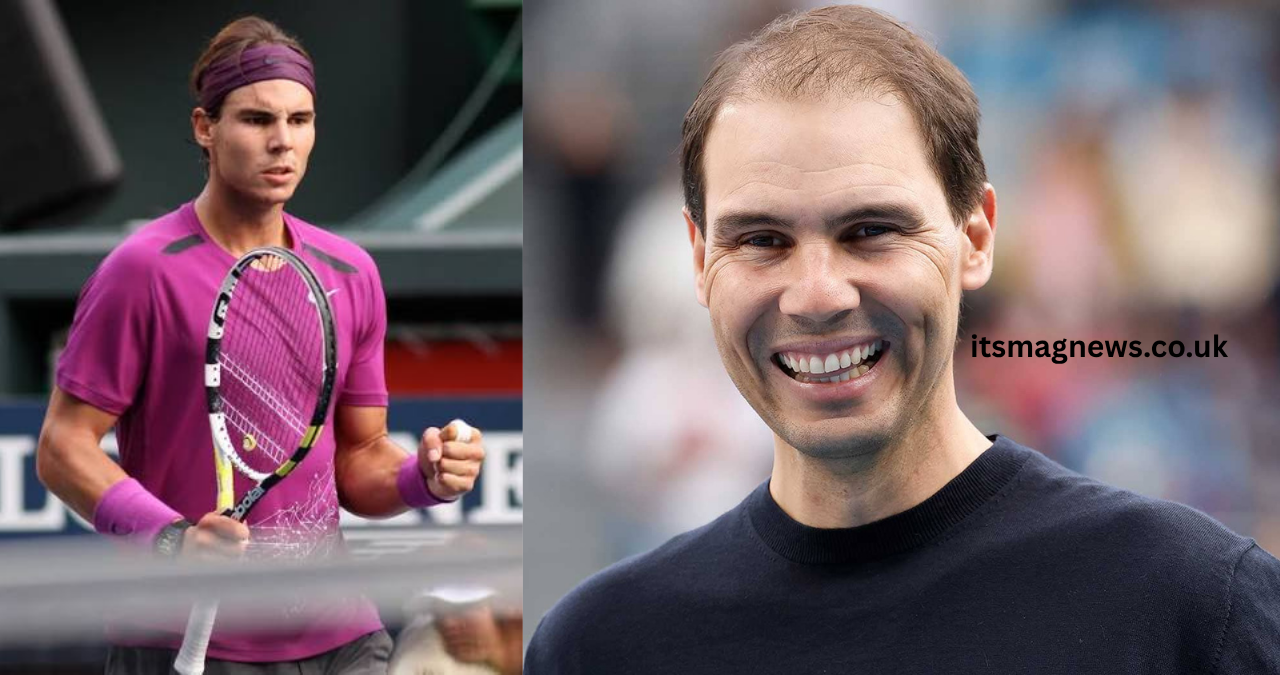

Rafael Nadal is one of the most respected tennis players in modern sports history. Known for his fierce competitiveness, powerful left-handed game, and remarkable success on clay, Rafael Nadal built a career that placed him among tennis’s greatest champions. From his early rise in Spain to his battles against Roger Federer and Novak Djokovic, his journey has been filled with major victories and difficult comebacks. Beyond trophies, his discipline and mental strength have made him an inspiration to millions of fans. Even after stepping away from professional tennis, his influence continues through his records, academy, charitable work, and lasting impact on the sport.
Rafael Nadal’s Early Life and Tennis Beginnings
Rafael Nadal was born on June 3, 1986, in Manacor, Mallorca, Spain. He grew up in a family that valued sports, hard work, and competition. His father, Sebastián Nadal, played an important role in his early development, while his uncle Toni Nadal became the coach who helped shape his tennis career.
Nadal started playing tennis when he was very young. Toni quickly noticed his natural ability and competitive personality. Instead of treating tennis as a casual hobby, Nadal developed a serious approach to training from childhood.
His early years were marked by intense practice and a strong focus on fundamentals. He became known for his determination and willingness to keep fighting even when matches became physically demanding.
Rafael Nadal’s Rise to Professional Tennis
Nadal turned professional as a teenager and quickly showed that he could compete with much older and more experienced players. His physical strength, heavy topspin, and aggressive movement made him difficult to handle.
His breakthrough came in the early 2000s, when he began winning important matches and establishing himself as one of the rising stars in men’s tennis. His success on clay was especially impressive.
In 2005, Nadal won his first French Open title at Roland-Garros. The victory was a major turning point. He became a Grand Slam champion at just 19 years old and immediately emerged as a dominant force on clay.
That first major title was only the beginning. Nadal would go on to create one of the most remarkable records in tennis history.
Rafael Nadal and His French Open Dominance
The French Open became closely connected with Nadal’s name. His movement on clay, heavy forehand, stamina, and ability to construct long rallies made him exceptionally difficult to defeat on the surface.
Nadal won the French Open multiple times and established an unmatched level of dominance at Roland-Garros. His clay-court record became one of the strongest examples of sustained excellence in professional sport.
His success was not simply the result of physical power. Nadal understood how to use angles, spin, court positioning, and patience. He could turn defensive situations into attacking opportunities and force opponents to play one more difficult shot.
The phrase “King of Clay” became widely associated with him because of this extraordinary run of success.
Rafael Nadal’s Grand Slam Career
Although clay was his strongest surface, Nadal proved that he could win major tournaments on every type of court. His Grand Slam career included triumphs at the Australian Open, French Open, Wimbledon, and US Open.
His Australian Open victories demonstrated his ability to adapt to hard courts. Wimbledon showed another side of his game, as he developed an increasingly effective grass-court style. His US Open success further confirmed that his achievements were not limited to clay.
Nadal’s Grand Slam journey also reflected his ability to adapt throughout his career. As injuries affected his movement and physical condition, he adjusted his tactics while maintaining his competitive identity.
His major victories against elite opponents became some of the most memorable moments in modern tennis.
Rafael Nadal vs. Roger Federer
The rivalry between Nadal and Roger Federer is widely regarded as one of the greatest rivalries in sports. Their contrasting styles made their matches especially compelling.
Federer relied on elegant shot-making, precise serving, quick movement, and an all-court attacking game. Nadal brought intense topspin, physical pressure, exceptional defense, and relentless determination.
Their meetings at Grand Slam tournaments produced unforgettable matches. The 2008 Wimbledon final is particularly famous. Nadal defeated Federer in an epic contest that remains one of the most celebrated finals in tennis history.
Their rivalry also developed into a friendship and mutual respect. While they competed fiercely on court, both players consistently praised each other’s achievements and professionalism.
Rafael Nadal vs. Novak Djokovic
Nadal’s rivalry with Novak Djokovic became another defining chapter of his career. Djokovic’s return of serve, defensive skills, flexibility, and consistency created a difficult challenge for Nadal.
Their matches often demanded exceptional physical and mental endurance. They played numerous long battles at Grand Slam tournaments and major events around the world.
Unlike some rivalries that were dominated by one player, Nadal and Djokovic exchanged major victories across different surfaces. Their competition helped push both players to improve.
The rivalry also became part of the larger conversation about the greatest men’s tennis players of all time. Nadal, Djokovic, and Federer formed an era of extraordinary competition that transformed the sport.
Rafael Nadal’s Playing Style
Nadal’s playing style was built around intensity. His left-handed forehand, especially when directed toward an opponent’s backhand, became one of the most recognizable shots in tennis.
His heavy topspin allowed the ball to bounce high and created difficult angles. Nadal could also generate tremendous pace when needed, making his forehand dangerous from almost any position.
His two-handed backhand was another important part of his game. He used it to defend, redirect pace, and create openings for his forehand.
Movement was equally important. Nadal chased down shots that appeared to be winners and often turned defensive points into opportunities. His ability to compete for every ball became a central part of his identity.
Rafael Nadal’s Mental Strength
One of Nadal’s greatest qualities was his mental approach. He became famous for staying focused during difficult matches and refusing to surrender points easily.
Even when he was behind, Nadal continued to compete with intensity. He rarely allowed a poor start or physical discomfort to completely change his attitude.
This mindset helped him win matches that seemed to be slipping away. His approach became a lesson for younger players who wanted to understand the importance of patience and resilience.
Nadal also maintained a strong sense of sportsmanship. His celebrations could be emotional, but he generally showed respect toward opponents, officials, and fans.
Injuries and Difficult Comebacks
Injuries were one of the biggest challenges of Nadal’s career. His demanding style required enormous physical effort, and over the years he dealt with several serious setbacks.
Knee problems, wrist issues, abdominal concerns, and other physical difficulties interrupted different stages of his career. Each comeback required extensive rehabilitation and careful preparation.
Nadal’s ability to return from injury became almost as important to his story as his victories. He repeatedly found ways to rebuild his form and compete at the highest level.
His later career was especially difficult because maintaining professional tennis fitness became harder. Yet he continued to pursue major goals whenever his body allowed him to compete.
Rafael Nadal’s Olympic Success
Nadal also represented Spain at the Olympic Games. His Olympic career included a singles gold medal at the 2008 Beijing Olympics and a doubles gold medal at the 2016 Rio Olympics with Marc López.
These achievements added another important dimension to his career. Grand Slam tournaments were the main focus of professional tennis, but Olympic success carried special meaning because Nadal competed for his country.
Representing Spain became a proud part of his sporting identity. His performances at the Olympics reflected the same commitment that defined his Grand Slam career.
Rafael Nadal’s Davis Cup Career
Nadal also enjoyed major success representing Spain in the Davis Cup. Team competition offered him a different experience from the individual nature of professional tennis.
He played an important role in Spain’s Davis Cup triumphs and repeatedly showed his willingness to represent his country.
The Davis Cup became another example of his commitment to Spanish tennis. His national-team career helped strengthen his reputation as an athlete who valued more than individual achievements.
Rafael Nadal’s Family and Personal Life
Nadal has generally kept his private life away from unnecessary media attention. He married his longtime partner, Maria Francisca Perelló, in 2019. The couple later welcomed children and have continued to maintain a relatively private family life.
Family has remained important throughout Nadal’s career. His parents and relatives supported his development from a young age, while Toni Nadal played a particularly influential role during his formative years.
As his professional career changed, Nadal increasingly focused on family and life away from the daily demands of the ATP Tour.
Rafael Nadal’s Business and Life After Professional Tennis
Nadal’s influence extends beyond tournament competition. His name has been associated with business partnerships, sports development, and charitable initiatives.
One of his most important projects is the Rafa Nadal Academy in Mallorca. The academy combines tennis training with education and aims to help young athletes develop both on and off the court.
The academy reflects Nadal’s broader approach to sport. He has often emphasized discipline, effort, education, and personal responsibility rather than focusing only on winning.
His post-playing career is therefore likely to remain connected to tennis even when he is no longer competing professionally.
Rafael Nadal’s Net Worth and Earnings
Interest in Rafael Nadal’s net worth has remained strong because of his extraordinary career earnings and global commercial appeal. Over many years, he earned substantial prize money from tournament victories while also building major endorsement relationships.
His financial success comes from more than tennis winnings. Long-term partnerships with international brands have played a significant role in his overall earnings.
However, exact net worth estimates can vary because private investments, business interests, property holdings, taxes, and contract details are not always publicly available.
What is clear is that Nadal became one of the most commercially successful tennis players of his generation. His reputation, consistency, and worldwide popularity created opportunities that extended well beyond the tennis court.
Rafael Nadal’s Retirement and Final Chapter
Nadal’s final years as a professional player were shaped by injuries and the physical demands of competing at the highest level. After a long career filled with major victories, he announced his retirement from professional tennis in 2024.
His decision marked the end of an era. Nadal’s retirement was not simply about one athlete leaving the sport. It represented the closing of a remarkable chapter in a generation that also included Federer and Djokovic.
Although he no longer competes regularly, his presence remains strong in tennis. Fans continue to follow his academy, charitable work, public appearances, and influence on younger players.
Rafael Nadal’s Legacy in Tennis
Nadal’s legacy is built on much more than his trophy collection. His approach to competition changed how many fans and players understood resilience.
He showed that a player could succeed through preparation, discipline, physical commitment, and tactical intelligence. His career also demonstrated that greatness does not always come from making tennis look easy. Sometimes it comes from making difficult things look possible through relentless effort.
His Grand Slam achievements, Olympic medals, Davis Cup success, and historic rivalries will remain part of tennis history for decades.
Perhaps his most lasting contribution is the standard he set for professionalism. Young players often mention Nadal when discussing work ethic, focus, and competitive spirit.
Why Rafael Nadal Remains So Popular in the United States
Nadal developed a large American fan base through his success at the US Open, hard-court tournaments, and major international events. American tennis fans also followed his rivalries with Federer and Djokovic closely.
His style appealed to audiences because his matches often contained drama and emotion. He fought for points, celebrated major victories passionately, and rarely appeared satisfied with an easy win.
For American sports audiences accustomed to stories of perseverance and comeback victories, Nadal’s career offered a familiar and powerful narrative.
His popularity also grew through his respectful public image. He became a global sports personality without relying heavily on controversy.
The Lasting Impact of Rafael Nadal
Nadal changed modern tennis through his achievements and his attitude. He proved that specialization on clay could coexist with success across every major surface.
His rivalry with Federer helped create some of the most memorable matches in tennis history, while his battles with Djokovic pushed the sport into an extraordinary competitive era.
At the same time, his academy and charitable efforts give his legacy a future beyond statistics. Young players can now learn within an environment influenced by the principles that shaped his own career.
Rafael Nadal will ultimately be remembered as a champion who combined extraordinary talent with an unmatched willingness to work. His story is not only about how many tournaments he won. It is about how often he returned, adapted, competed, and continued moving forward.
Frequently Asked Questions About Rafael Nadal
Who is Rafael Nadal?
Rafael Nadal is a retired Spanish professional tennis player who became one of the greatest champions in tennis history. He was especially dominant on clay and won major titles across all four Grand Slam tournaments.
When was Rafael Nadal born?
Rafael Nadal was born on June 3, 1986, in Manacor, Mallorca, Spain. He began developing his tennis skills at a very young age and became a professional as a teenager.
Why is Rafael Nadal called the King of Clay?
Nadal earned the nickname “King of Clay” because of his extraordinary success on clay courts. His movement, topspin, stamina, and tactical ability made him exceptionally difficult to beat on the surface.
How many Grand Slam titles did Rafael Nadal win?
Nadal finished his career with 22 Grand Slam singles titles. His collection includes victories at the Australian Open, French Open, Wimbledon, and US Open.
Who were Rafael Nadal’s biggest rivals?
Nadal’s most famous rivals were Roger Federer and Novak Djokovic. Their long-running battles helped define one of the strongest eras in men’s professional tennis.
When did Rafael Nadal retire?
Nadal announced his retirement from professional tennis in 2024 after an extraordinary career affected in its later years by recurring injuries.
What is Rafael Nadal doing after retirement?
Nadal remains involved in tennis through projects such as the Rafa Nadal Academy, along with business, charitable, and family commitments. His influence continues through the development of young players.
Conclusion
Rafael Nadal leaves professional tennis with a legacy that reaches far beyond his records. His Grand Slam success, Olympic achievements, Davis Cup performances, and legendary rivalries established him as one of the defining athletes of his generation.
His greatest lesson may be the value of persistence. Nadal faced injuries, difficult opponents, and changing physical limits, yet he repeatedly found ways to compete. That determination made him special and helped turn his career into one of the most inspiring stories in modern sport.
For tennis fans in the United States and around the world, his name will remain connected with courage, discipline, fierce competition, and excellence. Long after his final match, Rafael Nadal’s influence will continue through the players he inspires and the tennis community he helped shape.